



What is Biophilic Design? (And Why Plastic Plants Are an Insult to Your Client)
Let’s be honest: dropping a plastic fiddle-leaf fig into a windowless office cubicle isn't "biophilic design." It’s an upholstery cry for help.
True biophilic architectural design is the deliberate integration of natural systems, materials, and evolutionary patterns into the built environment. It is based on the foundational biophilia hypothesis popularized by biologist E.O. Wilson, which proves humans possess a hardwired, biological need to connect with the living world.
When architects use genuine biophilic techniques, they aren't just decorating. They are actively hacking human biology. Peer-reviewed data from The Center for Health Design confirms that spaces engineered with real natural analogs and organic materials measurably reduce cortisol levels, boost cognitive function, and lower blood pressure. For the hard data behind this, check out our accredited AIA resources on CaraGreen’s Education Page.

Three Core Biophilic Techniques Every Architect Must Know
When specifying a project, organize your biophilic strategy into the three distinct layers popularized by the 14 Patterns of Biophilic Design:
-
Direct Nature (The Real Stuff):
-
This means designing with active natural forces. You maximize glare-free daylighting to stabilize circadian rhythms, utilize passive ventilation, or integrate acoustic water features to mask office noise.
-
-
Natural Analogs (The Material Echo):
-
This is where your material palette does the heavy lifting. You specify non-living, organic materials and biomorphic shapes that mimic natural textures. Think visible wood grains, non-linear patterns, and tactile surfaces that demand to be touched.
-
-
The Spatial Subconscious (The Layout):
-
This involves layout configurations that trigger primal human comfort. You achieve this by balancing "prospect" (expansive sightlines) with "refuge" (secure, enclosed architectural nooks).
-

Sustainable Surface Materials: Moving Past the Greenhouse Myth
If your biophilic strategy relies entirely on living green walls, your client will hate you the second the irrigation pump breaks and the maintenance bill arrives. To build true, low-maintenance biophilic permanence, look to honest, sustainable surface materials:
1. Paper-Based Composites (The Timber Upgrade)
Stop sourcing high-maintenance hardwoods that deplete vulnerable forests. Dense, paper-based composites like PaperStone deliver an incredibly warm, leathery texture that satisfies the human hand's craving for organic feedback. You get the raw aesthetic warmth of dense timber, minus the environmental footprint. Learn how paper composites fulfill the tactile requirements of biophilic design techniques directly on our main hub.
2. Material Connection with Nature (Timber Slabs & Koskisen)
True biophilia values materials that honor their raw, organic origins rather than hiding them under artificial layers. This is why decorative elements like custom Timber Slab Tables are essential. They establish an explicit material connection with nature by celebrating raw, uninhibited forest geometry, natural splits, and wavy live edges right in the middle of a workspace. For a cleaner, engineered architectural statement, Koskisen Finnish birch colorful plywood transforms standard panels into decorative art. Its exposed, multi-layered edge grains offer an authentic visual link to northern, renewable forests, proving that functional millwork can simultaneously serve as a grounding natural focal point.
3. Mineral Surfaces and Recycled Glass Stone (The Geology Hack)
Authentic stone surfaces connect us directly to the earth. However, quarry mining is a carbon nightmare. Specifying advanced sintered stone or premium recycled mineral surfaces like Valiant Surfaces allows you to introduce massive, sweeping veins and natural geological patterns into lobbies and countertops with a perfectly clean conscience.
4. Vibrant, Biomorphic Color (Durat, Geos, & Gilasi)
Who said biophilia has to be beige and green? Nature is fiercely colorful, and human wellness thrives on vibrant visual texture. You can inject bold, natural elements into a space using high-performance, recycled surfaces:
-
Durat: This vibrant, fully recyclable solid surface lets you specify striking colors that can be found in nature.
-
GEOS: Composed of striking recycled glass bound in a durable resin, GEOS’colors are named for their resemblance to objects and spaces in nature.
-
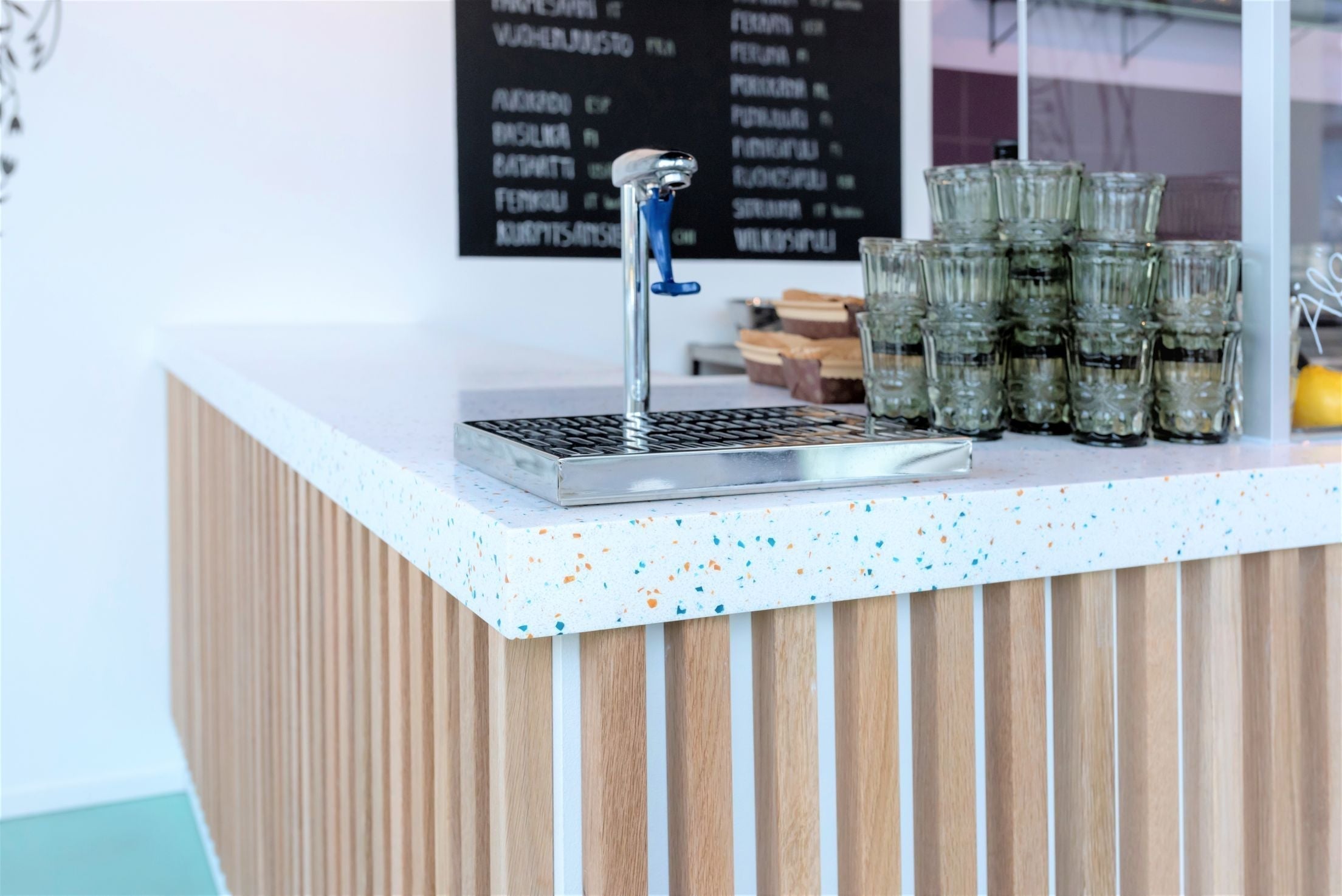
Gilasi: Made from up to 85% recycled glass and concrete, Gilasi offers a deeply textured, terrazzo-style visual that plays beautifully with natural light. It allows designers to use colorful surfaces that mirror the organic chaos of a shimmering riverbed or a geode.
5. Organoid Wallcoverings (The Sensory Play)
Biophilic design is not just visual—it is olfactory and tactile. Incorporating natural wallcoverings made from pressed alpine hay, rose petals, or moss allows you to apply real organic textures directly to the drywall. They emit subtle, natural scents that instantly lower ambient stress. Bring authentic natural scents and textures directly to your project walls by exploring our comprehensive guide to biophilic materials.
Stop Specifying Fake Wellness
Ready to stop guessing which surfaces are legitimately sustainable and which ones are just greenwashed acrylics? Browse our curated collection on the CaraGreen Brands Page to find sustainably sourced, tactile materials that make biophilic architecture seamless, durable, and breathtaking.

Share:
Stop Specifying Boring Stone: 7 Eco-Friendly Countertops Actually Worth Your Time