

Let’s be honest: for years, quartz and standard solid surfaces were the go-to choices for easy, uniform design. But that reputation is changing. Between the serious health risks of respirable crystalline silica dust during fabrication and the environmental impact of mining raw minerals only to mix them with petroleum resins, traditional quartz isn't as appealing as it once was.
At CaraGreen, we believe great design shouldn't come at the expense of the environment. Fortunately, today's sustainable options go far beyond basic compromises. Here are six sustainable surface alternatives that deliver exceptional style and performance without the eco-guilt.
1. Durat: The Playful Chameleon of Solid Surface
If you want the seamless versatility of solid surfacing, Durat is a standout choice. It incorporates up to 28% post-industrial recycled plastics, keeping material out of landfills, and is 100% recyclable for a closed-loop lifespan. Available in vibrant custom colors and striking terrazzo patterns, Durat proves that choosing sustainable materials doesn't mean sacrificing bold design.

2. GEOS: The Artful Terrazzo Blend
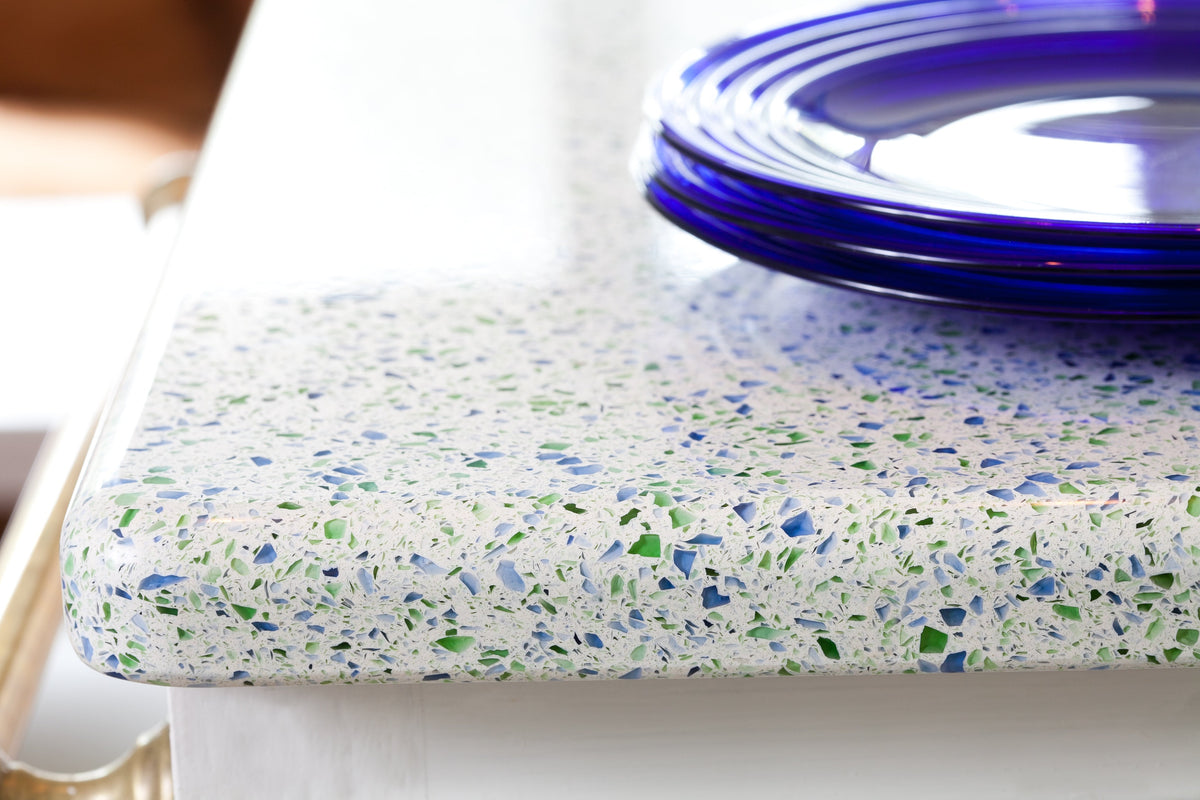
If you prefer the visual character of stone over uniform patterns, GEOS Recycled Glass Surfaces offers an ideal alternative. By combining pre- and post-consumer recycled glass with a specialized low-VOC binder, GEOS creates a durable, non-porous surface that resists stains and scratches while bypassing the heavy mining demands of quartz.

3. Gilasi: Engineered Precision Meets Recycled Glass
For projects prioritizing US-manufactured materials with embedded glass detail, Gilasi Recycled Glass Countertops provides a tailored look. Gilasi binds high volumes of recycled glass into a strong substrate, resulting in distinct, architectural surfaces that bring character to residential and commercial spaces alike.

4. Valiant: Crystalline Silica-Free Innovation
If you want the classic look of Calacatta marble without the health risks of silica dust, Valiant Surfaces offers a progressive alternative. Their Crystalline Silica-Free Collection uses advanced mineral compositions to capture the elegance of natural stone while protecting fabricators and reducing environmental impact.

5. Revolux: Advanced Eco-Conscious Durability
Revolux offers a resilient, eco-conscious option designed for high-traffic environments. Replacing traditional, resource-intensive inputs with recycled content and alternative mineral blends, Revolux provides a sleek, modern finish built for daily wear without relying on carbon-heavy raw extraction.

6. glass2: Fused Purity Without Binders
For a pure, streamlined material choice, glass2 99% Recycled Glass Surfaces offers an innovative solution. Unlike standard recycled surfaces that rely on resins or cement, glass2 uses 99% recycled glass fused together entirely through heat. The result is a non-porous, resin-free surface that can even be backlit for dramatic visual features.

Frequently Asked Questions (FAQ)
What are the most sustainable alternatives to quartz countertops?
The most sustainable alternatives to quartz countertops include surfaces made from recycled materials, such as recycled glass surfaces (like glass2, GEOS, and Gilasi) and recycled plastic solid surfaces (like Durat).
Why should I choose a sustainable solid surface over traditional quartz?
Traditional quartz countertops require resource-heavy open-pit mining for virgin quartz minerals and rely on petroleum-based resin binders. Additionally, fabricating standard quartz releases hazardous crystalline silica dust. Choosing a sustainable solid surface utilizes recycled pre- and post-consumer waste, reduces carbon footprints without sacrificing durability or design.
Are recycled glass countertops as durable as quartz?
Yes, advanced recycled glass countertops like GEOS and gilasi are highly durable, non-porous, and naturally resistant to scratches, stains, and heat. Because they do not require regular sealing like natural stone, they provide a low-maintenance, long-lasting surface option for both residential kitchens and high-traffic commercial spaces.
Share:
Timber Slab Tables | Commonly Asked Questions
The Material Intervention: Why Interior Spaces Need Better Than the Status Quo