


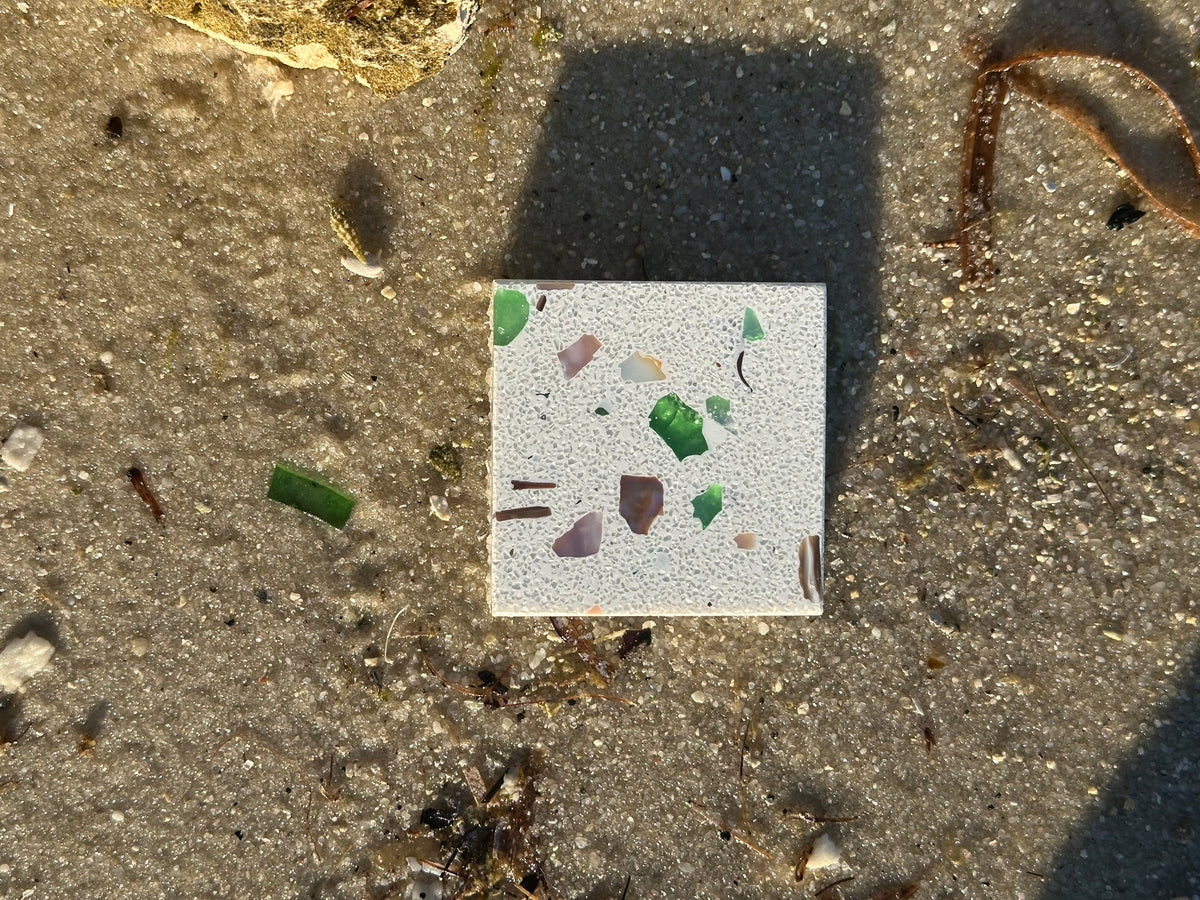
Choosing interior surfaces shouldn't mean sacrificing design vision for environmental responsibility. At CaraGreen, we help designers and architects build spaces that respect natural ecosystems. Our shift from promoting "Healthy Building Materials" to "Better Building Materials" reflects a clearer focus: moving past basic eco-friendly claims to deliver materials that perform exceptionally across the board.
If your design palette still relies on standard plastic laminates, synthetic acoustic panels, or mined stone, it might be time for a change. Modern architecture has shifted toward healthier, more sustainable alternatives, and interior surfaces should reflect that progress.
1. Recycled Glass: Translucent & Terrazzo Surfaces
Engineered quartz has dominated counter surfaces for years, but it relies heavily on synthetic resins and natural mined minerals. Recycled glass surfaces provide an alternative to the mined mineral content by diverting waste from the landfill.
Glass2: Made from 99% fused recycled glass with no resin binders. It resists heat, stains, and bacteria, and its high transparency makes it ideal for backlighting in feature walls, bar tops, and reception desks.
-
Gilasi: Made in Chicago, Gilasi blends 77% to 85% recycled glass with a zero-VOC epoxy binder. It offers a classic terrazzo look, delivering a durable, US-made surface option.
-
GEOS: Combining recycled glass fragments with a low-VOC resin, GEOS delivers the strength and feel of composite stone without requiring ongoing sealing. It works well in high-traffic commercial and residential setups.
2. PaperStone & Durat: Sustainable Sheet Materials & Solid Surfaces
For custom worktops, cabinetry, and wall panels, recycled and bio-based sheet goods offer strong durability with low environmental impact.
-
PaperStone: Made in Washington State from recycled paper and phenolic resins, PaperStone offers structural strength similar to dense hardwoods. Its matte finish develops a warm patina over time with regular use.
-
Durat: Durat turns post-industrial recycled plastic into seamless solid surfaces. Fully recyclable and silica-free, it allows custom color options for reception desks, retail counters, and bathroom vanities.
3. Koskisen & Timber Slabs: Responsibly Sourced Wood
When a design calls for wood, using responsibly harvested timber supports sustainable forestry while storing carbon long-term.
-
Koskisen: Koskisen produces high-grade birch plywood finished with transparent color coatings that highlight the natural grain underneath. It offers a strong, stable option for cabinetry, shelving, furniture, and accent walls.
-
Timber Slab Tables (TST): Milled from domestic trees salvaged from storm damage or land clearing, these live-edge slabs keep usable wood out of landfills and lock carbon into long-lasting furniture.
4. Organoid: Plant-Based Wallcoverings
Wall surfaces often get overlooked, but they offer great opportunities for non-toxic, expressive finishes instead of traditional vinyl coverings or standard paint.
Organoid wallcoverings bind natural plant material—like alpine hay, flower petals, and moss—onto flexible backing materials. They bring natural textures and subtle scents into interior spaces, connecting built environments directly to nature.
Material Comparison Overview
To assist with product specification across commercial and residential projects, here is a breakdown of how these material lines compare:
|
Surface Category |
Brand Spotlight |
Core Sustainable Composition |
Standout Design Feature |
Best-Suited Applications |
|
Fused Glass |
Glass2 |
99% recycled glass, zero resins or binders |
High transparency, ideal for backlighting |
Feature bar tops, glowing reception desks, luxury vanities |
|
Recycled Epoxy Glass |
Gilasi |
77–85% local US recycled glass, VOC-free epoxy |
Domestic production, customizable aggregate sizes |
Corporate conference tables, school breakrooms, retail counters |
|
Terrazzo Glass |
GEOS |
Pre- & post-consumer recycled glass, low-VOC resin |
Engineered stone feel without required sealing |
Kitchen islands, bathroom vanities, commercial displays |
|
Paper Composite |
PaperStone |
Recycled paper & phenolic (and/or melamine) resins |
Warm matte finish that patinas naturally |
Heavy-duty office desks, modern residential millwork, lab spaces |
|
Recycled Solid Surface |
Durat |
Post-industrial recycled plastics, 100% recyclable |
Seamless joints, hundreds of custom colors, zero silica |
Modern bathrooms, sleek public retail counters, custom furniture |
|
Bio-based Wallcoverings |
Organoid |
100% natural raw plants (hay, petals, moss) |
Preserves real plant textures and subtle natural scents |
Accent walls, acoustic backing panels, hospitality spaces |
|
Premium Birch Plywood |
Koskisen |
Sustainably harvested birch and renewables in production |
Translucent color coatings that highlight flawless grain |
Architectural furniture, creative shelving, retail displays |
|
Live-Edge Wood |
Timber Slab Tables |
100% sustainably salvaged domestic logs |
Distinctive live edges with unique grain patterns |
Statement boardrooms, luxury dining tables, workspace hubs |
Frequently Asked Questions
What are the best sustainable alternatives to toxic quartz and traditional interior plastics?
Great alternatives include bio-based wood products, recycled paper composites, and resin-free glass. PaperStone and Durat replace petroleum-based plastics with recycled paper and post-industrial polymers, while fused glass options like Glass2 completely remove crystalline silica hazards from stone surfaces.
What is the difference between quartz and recycled glass surfaces?
Standard quartz surfaces consist of mined stone bound by petroleum resins and contain high amounts of crystalline silica. Recycled glass options utilize post-consumer material and amorphous silica. Fused glass products eliminate resins entirely through thermal bonding.
How are Timber Slab Tables different from standard wood furniture?
Timber Slab Tables are constructed using 100% sustainably salvaged wood rather than clear-cut commercial lumber. The timber is entirely rescued from logs bound for landfills or paper mills—such as trees cleared for local utility paths or naturally fallen timber. This locks carbon safely into unique, live-edge statement furniture pieces indefinitely.
Why did CaraGreen change its tagline to "Better Building Materials"?
CaraGreen moved from Healthy Building Materials to Better Building Materials to emphasize a more complete standard. While health and non-toxic ingredients remain essential, a surface product also needs strong durability, solid visual appeal, and straightforward installation to truly serve modern building projects.
Share:
6 Sustainable Surface Alternatives That Don’t Compromise on Style