

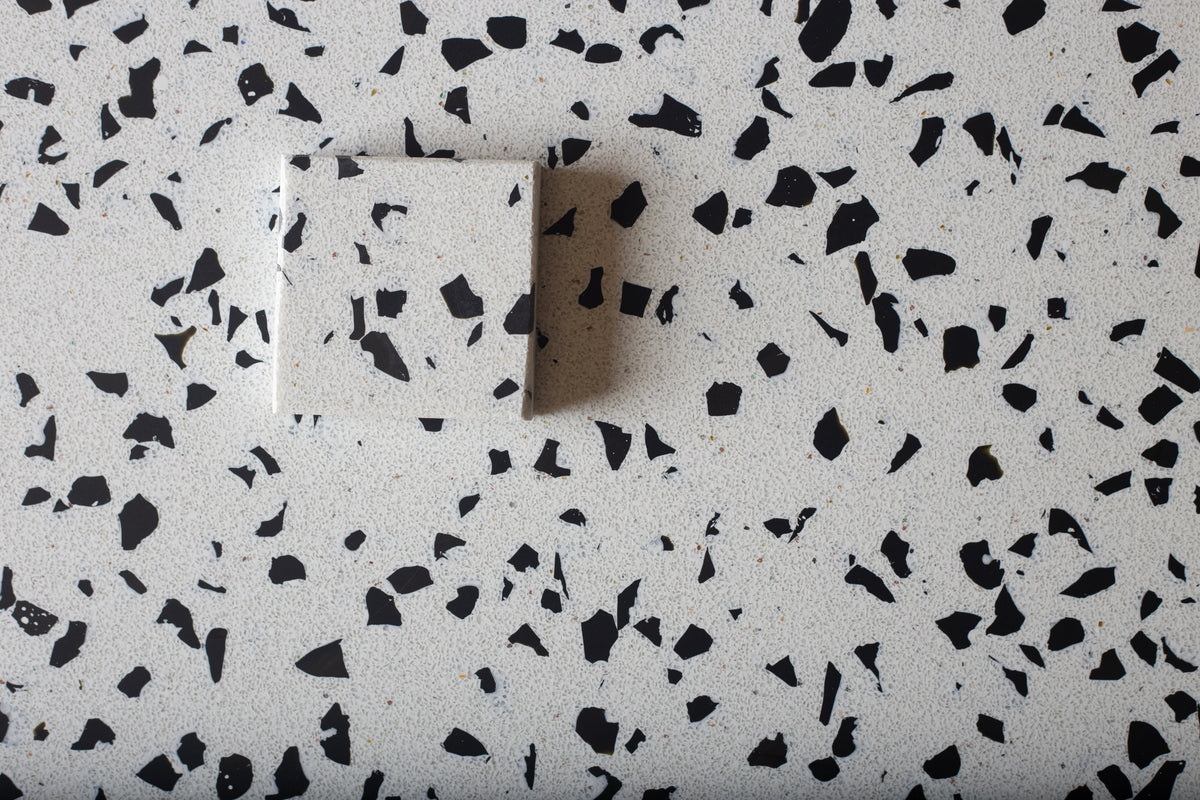
Gilasi is a durable, non-porous surface composed of 77% to 85% locally sourced recycled glass by weight, bound together with a VOC-free, aeronautics-grade epoxy resin. Manufactured in Chicago, IL, it provides a vibrant, eco-friendly countertop material for residential and commercial spaces.
Gilasi is proudly made in the USA and manufactured in Chicago, Illinois. It utilizes locally sourced recycled glass to minimize transportation impact, offering an eco-friendly building material tailored for green commercial and residential projects.
-
Does Gilasi recycled glass emit VOCs?
No, Gilasi is manufactured using a VOC-free epoxy binder. This ensures ultra-low to zero volatile organic compound emissions during daily use, promoting healthy indoor air quality for homes, offices, schools, and healthcare environments.
-
What slab sizes are available for Gilasi surfaces?
Standard Gilasi panels are produced in a length of 109 inches and widths of 28 inches or 62 inches. Thickness options include 2cm or 3cm, allowing designers to select the optimal dimensions for project yields.
Gilasi offers three distinct aggregate styles: Small Aggregate (Monochromatic), Medium Aggregate, and Large Aggregate. These variations provide versatile design options, ranging from subtle, fine textures to bold, terrazzo-style recycled glass patterns.
-
Is Gilasi a non-porous countertop material?
Yes, Gilasi recycled glass surfaces are completely non-porous and naturally resistant to moisture, stains, and bacteria. The aeronautics-grade epoxy binder eliminates the need for periodic chemical sealing, keeping daily maintenance simple.
-
How do you clean and maintain Gilasi countertops?
Maintaining Gilasi is very simple due to its non-porous surface. Daily cleaning requires only mild soap and warm water.
-
Can Gilasi recycled glass be used for custom furniture?
Yes, Gilasi is exceptionally versatile and ideal for custom commercial furniture, reception desks, tabletop surfaces, and retail displays, as well as kitchen and bathroom countertops.
-
What is the Gilasi Third Life reclamation program?
The Gilasi Third Life Reclamation Program ensures product circularity. At the end of a surface's lifecycle, Gilasi materials can be collected and re-processed to prevent landfill waste, supporting closed-loop sustainable building practices.
-
Is Gilasi suitable for commercial countertop installations?
Yes, Gilasi is engineered for demanding commercial applications. Its high-strength epoxy resin and recycled glass composition make it ideal for high-traffic environments, break rooms, corporate offices, and hospitality settings.
-
How many colors are in the Gilasi collection?
The Gilasi collection features a broad color range, including popular shades like Aqua, Azzuro, Carbonella, Dalmatian, Ice, Sapphire, and Costa. Custom color matching is also available for specialized architectural projects.
-
Does Gilasi have a Health Product Declaration (HPD)?
Yes, Gilasi offers a Health Product Declaration (HPD) alongside downloadable technical specification sheets, making it easy for architects and LEED professionals to verify material transparency and environmental standards.
-
What thickness options are available for Gilasi countertops?
Gilasi recycled glass slabs are available in 2cm and 3cm thicknesses. This flexibility allows designers to specify a sleek 2cm edge profile or a robust 3cm edge depending on structural requirements and aesthetic preference.
-
Is Gilasi made with recycled glass?
Yes, Gilasi contains between 77% and 85% recycled glass content by weight. The glass is sourced locally to minimize environmental impact while diverting substantial material from local waste streams.
-
How does Gilasi compare to traditional terrazzo?
Unlike traditional cementitious terrazzo, which can be porous and prone to staining, Gilasi uses an ultra-low-to-no VOC epoxy matrix. This delivers the iconic terrazzo look in a lightweight, stain-resistant, and completely non-porous format.
-
Can Gilasi countertops be customized for brand projects?
Yes, Gilasi offers custom color combinations and aggregate blending. Interior designers can customize both the glass color mix and the epoxy background matrix to align with corporate brand guidelines and project color schemes.
-
How does CaraGreen offset carbon emissions for Gilasi?
Operations for Gilasi incorporate carbon offset purchasing, further reducing the environmental footprint associated with manufacturing and logistics across sustainable building projects.
-
How can I order samples of Gilasi recycled glass?
You can request physical samples of Gilasi directly through CaraGreen's sample request portal to evaluate colorways, aggregate sizes, and finishes for your material design boards.
-
Is Gilasi safe for food preparation areas?
Yes, Gilasi is non-porous and manufactured with a VOC-free epoxy resin, creating a hygienic surface that prevents bacterial absorption and staining in residential kitchens and commercial food service areas.
-
How can I request a quote for Gilasi surfaces?
You can submit your project dimensions and material specifications directly through the CaraGreen Request a Quote page for fast, accurate estimating assistance.
Share:
The Interior Designer's Guide to Recycled Glass Countertops