


Standard quartz has started to feel a bit uninspired. It’s practical and safe, but modern spaces often call for more character. If you're looking to add distinct personality to a design while using environmentally responsible materials, recycled glass countertops are worth a close look.
At CaraGreen, we focus on surface materials that combine refined aesthetics with thoughtful sourcing. Recycled glass stands out as both a sustainable choice and a compelling design feature. Whether your vision calls for vibrant terrazzo patterns or a sleek, monolithic glass slab that catches natural light, there is a recycled glass option tailored to your space.
A Designer's Guide to Recycled Glass Countertops
1. GEOS: The Vibrant Terrazzo Trailblazer
For projects that embrace bold texture and color, GEOS Recycled Glass Surfaces blends pre- and post-consumer recycled glass with a high-strength binder. The result is a non-porous, durable material embedded with subtle specks of color. It captures the classic look of terrazzo without requiring complex sealing or intensive maintenance. Resistant to daily wear, GEOS brings a fresh, contemporary feel to residential kitchens and commercial interiors alike.
2. Gilasi: The Sophisticated, Locally Crafted Powerhouse
When regional sourcing and proven performance are top priorities, Gilasi is an excellent fit. Crafted with a focus on local material streams, Gilasi pairs crushed recycled glass with a VOC-free epoxy binder. Its structured appearance suits modern and industrial spaces well, delivering a durable finish that proves sustainable materials can look clean, modern, and high-end.
3. glass2: The 99% Pure, Resin-Free Minimalist
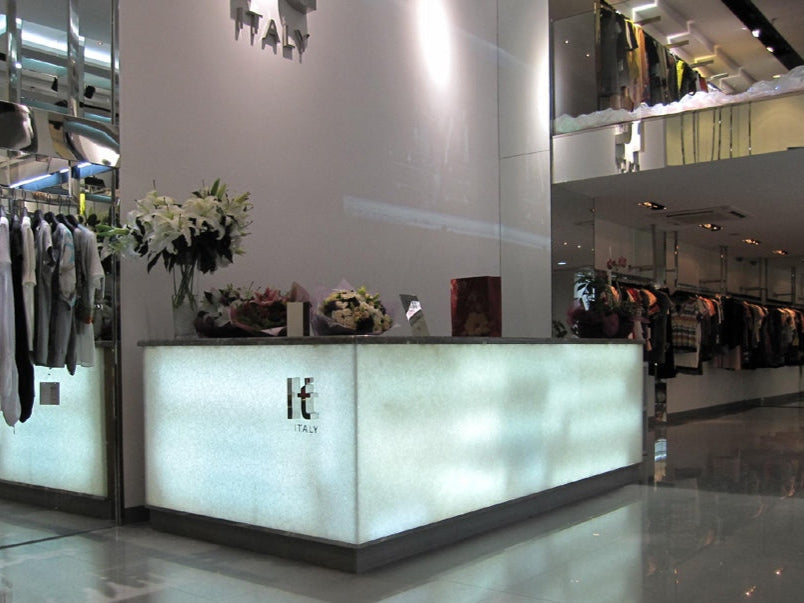
If your design calls for pure glass without added binders, consider glass2. This unique material consists of 99% recycled glass fused under intense heat and pressure without resins or glues. Visually, it provides a luminous depth that traditional quartz cannot match. Integrating backlighting with LED panels behind glass2 can turn a kitchen island or bar front into a striking focal point.
4. Revolux & Valiant: The New Wave of Glass Composites
Rounding out the options are Revolux and Valiant. These engineered glass composites balance cost with high performance. Using advanced manufacturing techniques, they combine recycled glass fragments into seamless slabs that evoke the movement of natural stone while diverting waste from landfills. They offer an ideal quartz alternative when you want the durability of engineered stone along with a silica-free environmental story.
Frequently Asked Questions
1. Is recycled glass surfacing completely free of crystalline silica?
Yes, when referring to amorphous silica. Traditional engineered stone contains crystalline silica (SiO₂), which requires strict workplace precautions during fabrication. In contrast, the recycled glass used in GEOS and Gilasi consists of amorphous silica, which does not present a crystalline silica hazard during processing. Brands such as glass2, Revolux, and Valiant provide excellent, crystalline silica-free alternatives that support indoor air quality goals.
2. How do these materials perform on Health Product Declarations (HPDs) and Declare Labels?
These brands emphasize material transparency. Gilasi utilizes VOC-free epoxy matrices. These formulations align well with Red List Free criteria, helping projects satisfy material ingredient requirements under LEED v4, v4.1, and v5 standards. Please contact your rep for more information on all product lines.
3. What is the breakdown of pre-consumer vs. post-consumer recycled content by weight?
Recycled content percentages vary by product to achieve different design and environmental targets:
-
GEOS contains 62% to 67% recycled glass by weight.
-
Gilasi leverages 77% to 85% locally sourced recycled glass.
-
glass2 leads the pack at an ultra-pure 99% recycled glass composition.
Technical Specifications & Installation Aesthetics
4. What are the standard slab dimensions and thicknesses for commercial scaling?
These materials integrate easily into standard layout grids. GEOS comes in slab dimensions of 118” x 63”, while glass2 is available at 118” x 55”. Both offer standard 2cm and 3cm thicknesses to fit diverse architectural details.
5. Can resin-bound glass composites be used in exterior facades or outdoor kitchens?
For outdoor environments, resin-free options are recommended because direct sunlight can cause epoxy binders to yellow over time. Resin-free glass2 is ideal for outdoor kitchens, commercial patios, and exterior wall cladding. Because it is 100% fused glass without polymers, it remains fully UV-stable and weather-resistant.
6. What are the exact requirements to successfully back-light a glass island or feature wall?
To effectively backlight glass2, install flat LED panels or light guide plates directly behind the slab. Maintaining a gap of roughly 2 to 3 inches between the light source and the surface allows the illumination to spread evenly without hot spots. Specifying translucent color options like Antarctica or Aquamarine yields the best results.
7. How visible are the joints, and what adhesive should be specified for seaming?
Because GEOS and Gilasi fabricate and perform similarly to engineered stone, fabricators can achieve tight, discrete seams using color-matched acrylic or epoxy adhesives. For pure fused glass surfaces, translucent seam adhesives ensure a clean appearance, even when backlit.
Structural Performance & Liability Prevention
8. What is the impact of thermal shock on these materials in commercial culinary applications?
Resin-bound surfaces handle routine thermal changes well, but direct contact with extreme heat (such as placing cookware straight from an oven onto a cold surface) can cause localized stress. Resin-free glass2 offers higher heat resistance, though incorporating trivet requirements into maintenance guidelines is good practice for any glass material.
9. Do recycled glass surfaces chip or fracture during heavy-duty fabrication?
With proper tooling, these materials fabricate reliably. GEOS cuts and finishes with equipment standard to quartz processing. For 99% fused glass like glass2, reducing bridge saw feed speeds and using continuous-rim diamond blades designed for glass or porcelain helps prevent micro-chipping along the edges.
10. How do these materials rank on the Mohs Hardness Scale?
These surfaces offer robust scratch resistance for high-traffic environments. Recycled glass slabs typically score between 6 and 7 on the Mohs scale, performing similarly to engineered quartz and natural granite under daily use.
11. Are there specific chemical or solvent restrictions for commercial cleaning protocols?
Because these materials are naturally non-porous, they do not require special sealants and clean easily with standard eco-friendly commercial cleaners. To protect the surface finish over time, avoid harsh industrial chemicals such as methylene chloride or concentrated hydrofluoric acid.
Sustainability, Credits & Commercial Costing
12. How do these materials contribute to localized sourcing and regional LEED credits?
For projects seeking regional sourcing credits under LEED, Gilasi is a strong candidate. Manufactured in Chicago, Illinois, it utilizes regional recycled glass streams, helping reduce the embodied carbon footprint associated with transportation.
13. What are the typical price-per-square-foot metrics for budget forecasting?
While pricing depends on aggregate detail and slab thickness, uninstalled material estimates generally fall between $65 and $140 per square foot. This places recycled glass in a competitive position relative to premium quartzites, sintered stone, and natural marble while offering a clear sustainability story.
14. Are these products certified for commercial food preparation zones and healthcare spaces?
Yes. Their dense, non-porous surface naturally resists bacteria and moisture absorption without requiring anti-microbial coatings. They meet the hygiene and cleaning standards required for healthcare spaces, commercial bar tops, and corporate amenities.
15. What happens to the off-cuts and slab scraps after project fabrication?
Because these materials consist of glass and inert mineral matrices, fabrication off-cuts can be crushed and reused as aggregates for terrazzo, road bedding, or precast concrete, supporting site sustainability goals.
Share:
GEOS Recycled Glass Surfaces - Commonly Asked Questions
Gilasi Recycled Glass Stone - Commonly Asked Questions