


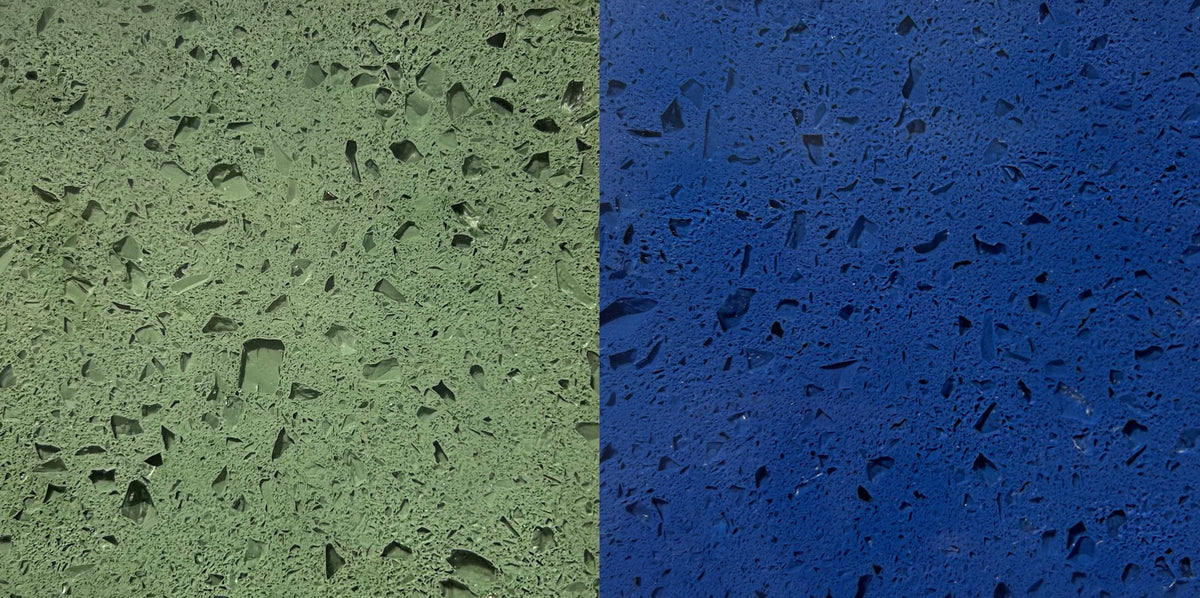
Let’s pivot today’s materials lesson to a geography correction that finally feels right. As architects and designers push for higher standards this Earth Day, the demand for verifiable sustainable finishes is at an all-time high. At CaraGreen, we’ve decided it is time to settle the trust issues caused by the Arctic’s original marketing mishap—the fact that Iceland is green and Greenland is icy.
Enter our two newest GEOS recycled glass surfaces, designed to bring a sense of truth, and high-performance design, back to your material palette.
The Arctic Resolution: Greenland vs. Iceland
Greenland (The Dark Green Base):
We are finally giving the built environment a "Greenland" that is actually green. This deep, forest-toned base is packed with clear, recycled glass aggregate that catches the light like the first spring thaw. It’s a moody, sophisticated, and biophilic specification that feels incredibly welcoming without compromising on commercial durability.

Iceland (The Dark Blue Base):
A deep, midnight blue that reflects the volcanic, oceanic soul of its namesake. The clear glass aggregate mimics the sparkling clarity of glacial ice. It’s the perfect choice for high-traffic hospitality or corporate spaces demanding an "edge of the world" aesthetic, entirely skipping the carbon footprint of a flight.

Sustainable Finishes That Stand Their Ground
In an architecture industry where "green" is occasionally reduced to a hollow marketing buzzword, CaraGreen actively curates materials that solve real design problems while working for the planet. We relentlessly vet the industry's best sustainable surfacing options so your firm can specify with absolute confidence.
-
Healthy & Honest: These new GEOS colors are completely crystalline silica-free. Specifying them entirely eliminates the occupational silicosis hazard for the fabricators cutting your designs, while ensuring a healthier indoor air quality profile for the end-user.
-
Recycled Roots: By utilizing upcycled glass aggregate, these surfaces keep hundreds of pounds of waste out of local landfills. Every slab you specify is a verifiable win for the circular economy and your project's LEED targets.
-
Durable by Design: Engineered to be completely non-porous and highly stain-resistant, these commercial countertops are built to handle rigorous daily abuse. Because we know your clients would rather enjoy their striking architectural spaces than adhere to a strict annual sealing schedule.
Whether you are grounding a corporate lobby with the earthy depth of Greenland or injecting a cool, celestial vibe into a restaurant bar with Iceland, these new launches prove that luxury aesthetics shouldn't cost the earth.
Ready to see if the glass is truly greener? Order your samples today and let’s start building a smarter, healthier materials library together.
Frequently Asked Questions: Specifying GEOS Recycled Glass Surfaces
Are GEOS recycled glass surfaces crystalline silica-free?
Yes. GEOS surfaces are formulated without crystalline silica, making them a vastly safer alternative to traditional engineered quartz. Specifying silica-free materials eliminates the risk of silicosis for the tradespeople who fabricate and install the countertops.
How durable are recycled glass countertops for heavy commercial use?
GEOS recycled glass surfaces are engineered for high-traffic environments. Utilizing a proprietary resin binder, the slabs are entirely non-porous, meaning they are inherently resistant to stains, moisture, and bacteria without ever requiring an application of chemical sealants.
Does specifying GEOS surfaces contribute to LEED certification?
Absolutely. Because GEOS incorporates a high volume of upcycled post-consumer and post-industrial glass aggregate, specifying these surfaces directly contributes to green building standards and can help projects achieve valuable LEED credits.
Where can commercial architects source GEOS surfaces in North America?
CaraGreen is a premier distributor of GEOS recycled glass surfaces. We specialize in equipping the commercial architecture and design community with thoroughly vetted, high-performance sustainable finishes.
Share:
Pull Up a Chair: Why Commercial Architects Are Specifying Sustainable Timber Slabs
The Quartz Crisis: How a Perfect Storm is Dismantling an Industry