
Rethinking Terrazzo
3 Sustainable Surfacing Alternatives for the Modern Architect
Terrazzo is officially back, and it’s no longer confined to the frantic, echoing corridors of mid-century airports. From high-end corporate lobbies to bespoke hospitality spaces, the chunky, composite aesthetic has reclaimed its throne. But let’s be brutally honest: while the aesthetic has evolved, the environmental story often hasn't.
Originally born from Italian ingenuity—suspending discarded quarry scraps in clay—modern terrazzo frequently relies on virgin materials, abandoning its sustainable roots for pure aesthetic capitalization. Furthermore, traditional poured-in-place terrazzo is notoriously labor-intensive. It requires specialized artisans, agonizing cure times, and budgets that can quickly spiral out of control.
If you are a commercial architect or designer tasked with specifying sustainable finishes, you shouldn't have to choose between hitting your LEED targets, staying on schedule, and achieving that coveted terrazzo flair. That’s where CaraGreen steps in. As the industry's premier curator of sustainable building materials, we've sourced the highest-performing, pre-cast eco-surfaces so you can specify with absolute confidence.
Here are three sustainable terrazzo alternatives that deliver the architectural impact you want, without the installation headaches or environmental guilt.
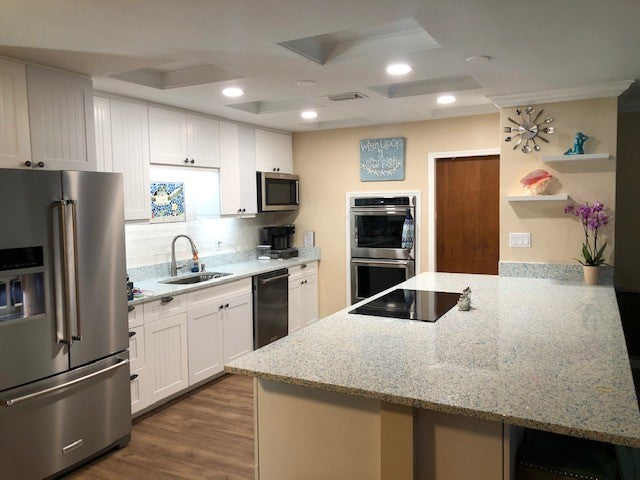
GEOS

1. GEOS Recycled Glass Surfaces: The Low-Maintenance Luminary
The Vibe: Shimmering, familiar, and incredibly reliable.
Why Specifiers Love It: If you want the visual depth of traditional terrazzo without the tedious maintenance schedule, GEOS is your go-to specification. Utilizing recycled glass and seashells embedded in a durable resin binder, it delivers a striking aesthetic that thrives in both commercial and residential applications. The best part? It’s completely non-porous. It fabricates exactly like engineered stone and requires zero sealing. Your clients get the brilliant, chunky aesthetic; you get the peace of mind knowing you specified a surface that actually performs in the real world.
Learn more about GEOS here.
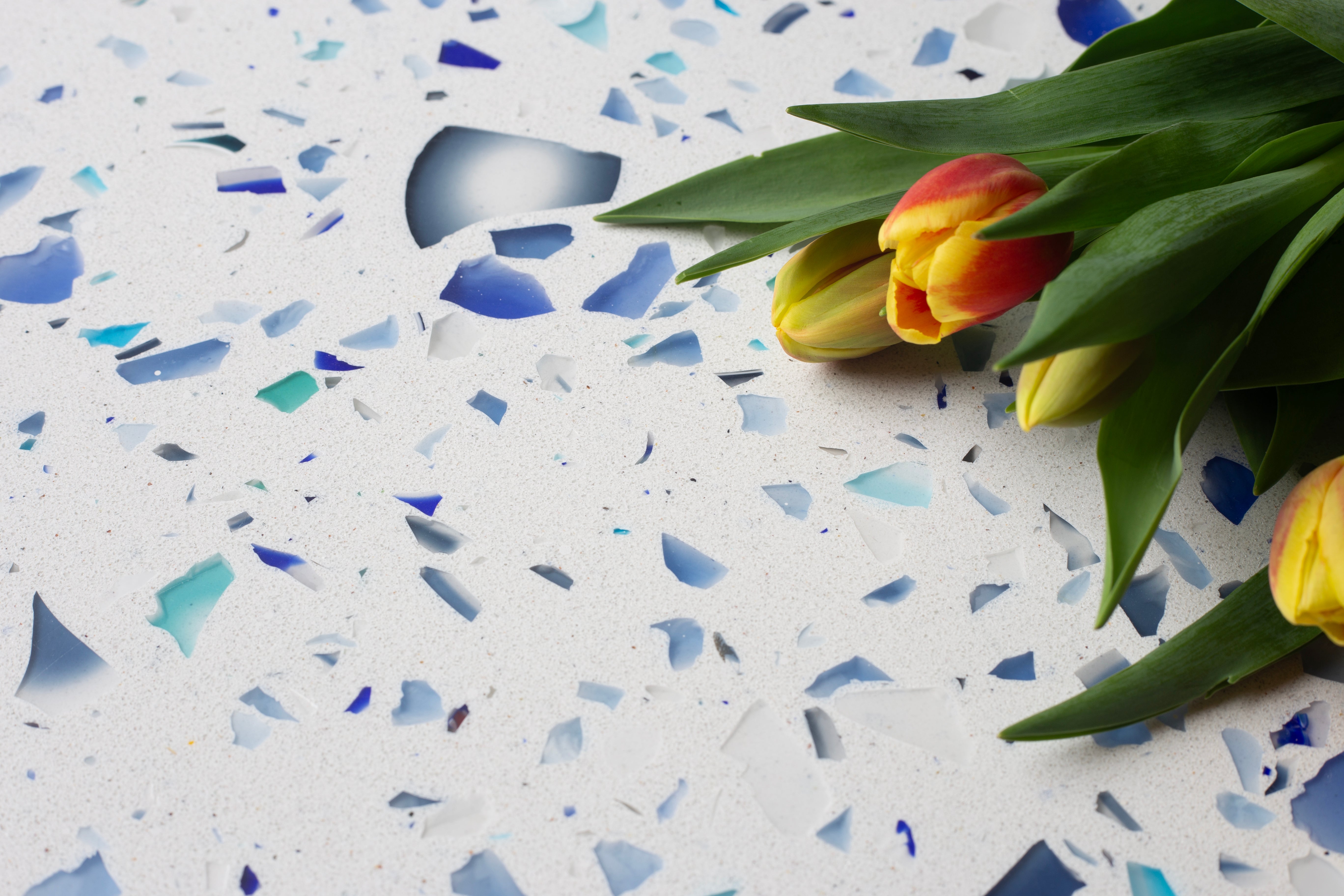
2. Gilasi: The American-Made Terrazzo Upgrade
The Vibe: Sleek, engineered, and aggressively resilient.
Why Specifiers Love It: Manufactured directly in Chicago, IL, Gilasi proves that environmental stewardship doesn't have to look crunchy. By utilizing an advanced aeronautics-grade epoxy instead of a traditional cement binder, Gilasi achieves a completely non-porous, heavy-duty slab that entirely skips the tedious annual sealing schedules demanded by classic terrazzo. It provides that coveted, architectural depth while acting as a massive sink for diverted post-consumer and post-industrial glass waste. It is American manufacturing and circular design operating at their absolute peak.
Learn more about Gilasi here.
Durat Palace

Pictured: Durat Palace in Violette Royale, Absinthe, Blue Hawaiian, and Mint Julep
3. Durat Palace Collection: Seamless Circularity
The Vibe: Bold, monolithic, and unapologetically colorful.
Why Specifiers Love It: Sometimes, your design intent requires the terrazzo vibe but demands a monolithic, seamless execution. Enter the Durat Palace Collection. Manufactured using post-industrial recycled plastics and acrylics, Durat champions a true circular economy. The Palace Collection leans into a vibrant, Scandicolor-inspired palette, offering a slightly less "stoney" but equally compelling speckled aesthetic. Because it is a solid surface, it allows for completely invisible joints and integrated sinks, making it a highly hygienic and dynamic choice for high-traffic commercial environments.
Learn more about Durat Palace here.
Stop Sourcing Commodities. Start Specifying Solutions.
You shouldn't have to compromise your design vision to meet an aggressive sustainability mandate. CaraGreen is dedicated to arming architects and designers with surfacing materials that look incredible and perform responsibly.
Ready to build a smarter, more sustainable materials library? Browse our All Products collection to start pulling samples, or Request a Quote directly for your active commercial build today.
Frequently Asked Questions: Specifying Sustainable Terrazzo Alternatives
What are the main drawbacks of traditional poured-in-place terrazzo?
Poured-in-place terrazzo is highly labor-intensive, requires specialized artisans, demands lengthy curing and polishing times, and often utilizes virgin materials. Pre-cast sustainable alternatives offer the same aesthetic with predictable fabrication, faster installation, and verified recycled content.
Are there eco-friendly alternatives to terrazzo that don't require sealing?
Yes. Materials like GEOS Recycled Glass Surfaces and Gilasi utilize proprietary resin and epoxy binders that make the surface entirely non-porous. This eliminates the need for the annual sealing, waxing, and maintenance typically associated with traditional cement-bound terrazzo.
Can terrazzo-style countertops be used in seamless applications?
Traditional stone terrazzo cannot, but sustainable solid surface alternatives like Durat can. Durat incorporates recycled plastics and can be fabricated with completely invisible joints, making it ideal for monolithic design schemes, extra-long reception desks, and highly hygienic commercial spaces.
How do I source reliable sustainable surfacing materials for commercial projects?
Commercial specifiers should look for materials backed by verified high recycled content, bio-based resins, and closed-loop manufacturing processes. CaraGreen specializes in vetting and curating these exact high-performance, eco-friendly finishes for the architecture and design community.
Share:
Quartz vs. Quartzite: The Architect’s Guide to Specifying the Right Surface
Sintered Stone or Porcelain?? What’s the Difference?